Profit Bubbles

Profit Bubbles are where customers decide what you are offering is worth their money.
Profit Bubbles are the point of value added—a store, a truck, a job site, a location, a kitchen. Customers decide if pricing, inventory, and service are worth their time and expense.
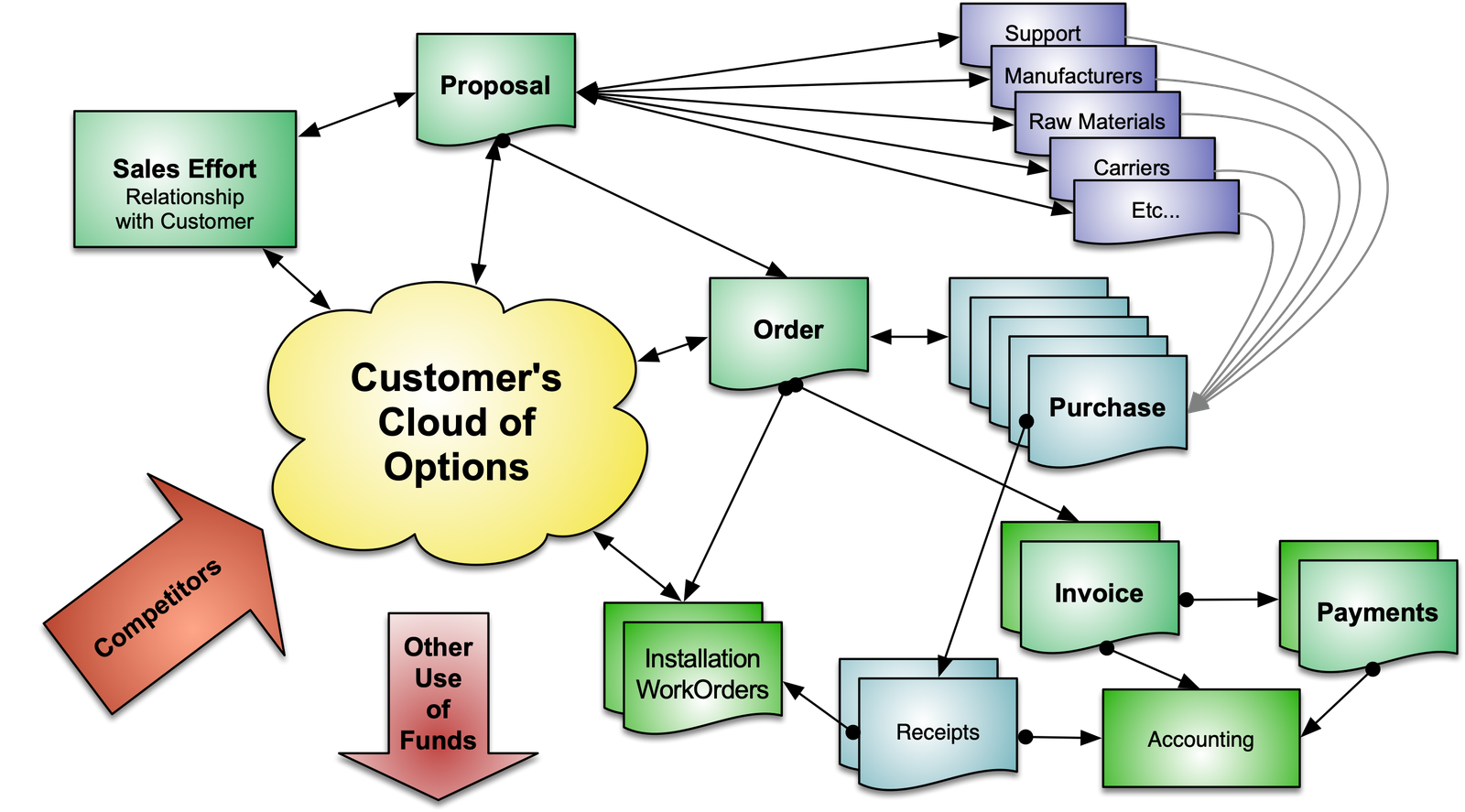
WebClerk empowers every point-of-value-added, every Profit Bubble, to focus their resources on the wants of customers.
Sales, collections, inventory changes, commissions, taxes, and currency differences are converted into General Ledger Journals and posted into any accounting software to satisfy audit and accounting requirements.
At WebClerk we view that running a company based on accounting software puts the emphasis on administration. Separate functions:
In larger companies, each point-of-value-added, each Profit Bubble, is empowered to focus on what is most profitable in its mission—not what can fit within rules made remote from the needs of its customers. The company is knit together by reporting based on GL Journals.
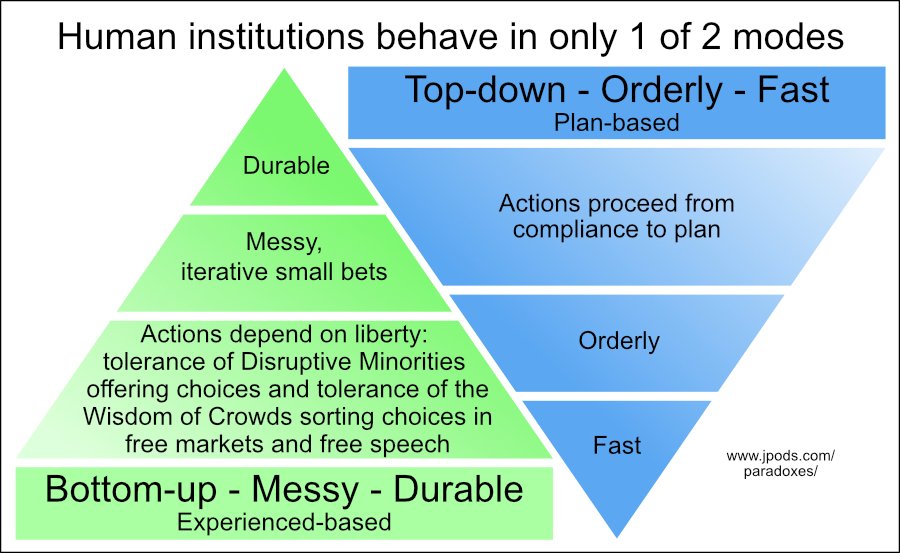
Human institutions behave in only one of two modes. Every business picks one—whether they know it or not.
Mike runs a heating and cooling business. Each truck is a profit bubble. Each technician tracks their jobs, parts, and invoices. Mike sees which truck makes money and which one burns it.
Dave does residential service calls. Maria handles commercial contracts. Jake runs new installations. Lisa does preventive maintenance. They use different parts, different pricing, different customer types. They don't need the same dropdown lists. They just need to post their revenue and expenses to the same chart of accounts.
Sarah owns 6 pet supply stores across two states. Each store has its own customers, its own inventory mix, its own local suppliers. The beach town store stocks different products than the suburban store.
Every company in a battalion is its own property control unit. Each company commander signs for their property. Each company maintains their own hand receipts.
The Army already works this way. The battalion doesn't manage Alpha's radios—Alpha's commander signs for them. The same pattern applies to any organization where the people closest to the work should control it.
Each county emergency office, each Guard unit, each FEMA warehouse manages its own inventory. The problem isn't supply—it's visibility. One county has 500 generators and no tarps. A county 200 miles away has 2,000 tarps and no generators.
Each bubble owns its inventory. Nobody gives up control. But by publishing availability to trusted partners, a scarce resource that is abundant in one location becomes visible to everyone who needs it. When supplies move between bubbles, they buy and sell—a purchase order from one, a sales order from the other. Inventory stays accounted for at every step. The network is the warehouse.
Two plumbing partners, each running their own jobs. Three restaurants under one owner—a taco shop, a pizza place, a catering kitchen. Different menus, different suppliers, different labor models. One set of financials. Each concept is a bubble.
In 2003, this architecture was proposed to rebuild Iraq's economy. The idea: give every warehouse, trucker, and hospital a copy of WebClerk—on a thumb drive if they didn't have a computer. Each one is a profit center. Each one tracks its own inventory and transactions. When they hand off goods, they buy and sell. Accountability at every step.
"How the ant ate the elephant; small bites, lots of friends."
Networks were intermittent. Power was unreliable. The solution was sneaker-net: plug the thumb drive into a computer at pickup, exchange transactions, plug it in again at delivery. When connectivity returned, the network knit itself together from the transactions each bubble had recorded independently.
Twenty-two years later, the computers are cheaper, the networks are better, and the software is free and open source. The architecture hasn't changed because it didn't need to. Bottom-up works.
GL journal entries are the universal language of accounting. The only thing that flows between a bubble and its parent. Small. Standard. Universal. Every system speaks it since 1494.
The journal entry is to accounting what the IP packet is to the internet. The parent provides a shared chart of accounts. Each bubble maps its transactions to those accounts. The parent never sees individual invoices, customer names, or inventory counts. It sees journal totals by account, by period. That's enough.
Each bubble is a WebClerk installation. Free. Open source. Runs on a tablet, laptop, or $500 server. One command to set up. Each bubble is empowered to focus on what is most profitable in its mission—not what can fit within rules made remote from the needs of its customers.
Free. Open source. Runs on your hardware. Your data stays yours.